
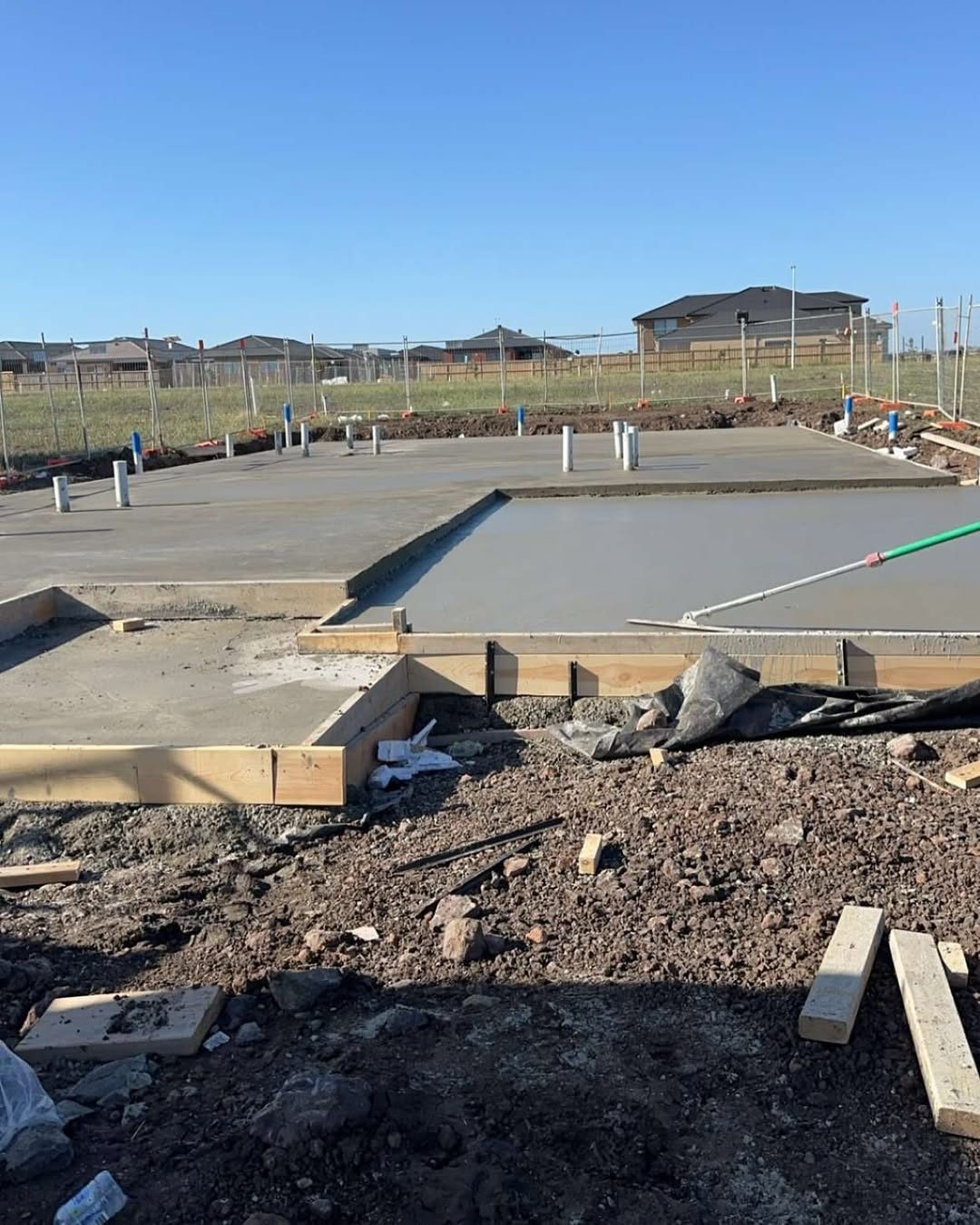
For most people building a home, slab day is the first genuinely dramatic day of the build — the day the drawings become an object. It's also a carefully choreographed operation between three parties who may never have worked together before: the concrete supplier, the pump crew and the concreters. Here's how the day actually runs when it runs well, from our side of the hose.
Before the day: the setup
A good slab pour is booked, not improvised. In the week before, three conversations happen:
- Volume and mix are locked in. Your concreter measures the formwork and orders the concrete — typically 20–45m³ for a single-storey home, in a slab-grade mix. For waffle pod slabs the calculation includes ribs and topping; getting it right matters because a mid-pour shortfall is the classic slab-day failure.
- The pump is matched to the site. Open estate block with wide frontage? Possibly a boom. Established street, tight access, pour at the rear? A line pump. Our comparison guide covers the logic.
- Truck spacing is agreed. A 32m³ slab is five-plus agitator loads. The batch plant schedules them at intervals matched to pump output and finishing pace — get this wrong and either the pump starves or trucks stack up burning waiting time.
The afternoon before, we confirm everything with whoever booked us. Our full site prep checklist covers what should be ready at your end.
6:00–7:00am: set-up
We arrive before the first truck — always. The pump positions where we agreed, outriggers or trailer stabilised, line laid and clamped (or boom unfolded), and the system primed with grout so the first concrete moves smoothly. The concreters arrive in the same window, do their final formwork walk, and set out screed rails or laser levels. By the time truck one rumbles up, everything is ready to receive it.
7:00am–midday: the pour
The rhythm of a slab pour is set by the finishing crew, and the pump's job is to hold that rhythm:
- Edges and ribs first (on a pod slab), then the field of the slab in strips the screeders can work.
- The operator feeds where the crew points — a good operator watches the screed, not the hopper, and slows before the crew has to ask.
- Trucks rotate through — as one empties, the next backs in. The operator manages the hopper level so the line never sucks air and the pour never stops. A stopped pour risks cold joints; continuity is the whole game.
- Pod slabs get gentler treatment — concrete placed with too much velocity displaces pods and floats steel. It's a feel thing, and it's why experience matters more on residential slabs than people assume.
A typical house slab pumps out in three to five hours. The concreters keep working long after — screeding, bull floating, waiting on bleed water, then trowelling — but the pump's part ends around lunch.
Midday: wash-out and gone
Wash-out is where pump companies show their character. The line gets cleared (there's always concrete left in it — we plan for this in the order volume), the hopper and gear get washed into our containment, and the waste leaves with us. What we don't do: hose slurry into your stormwater, your garden or the gutter. The site should look like we were never there, minus one new slab.
What can go wrong (and how it's prevented)
- Short load: prevented by careful measurement and ordering with line allowance. If it happens anyway, a quick decision on a top-up load beats pulling the last section thin.
- Truck gaps: prevented by realistic spacing agreed with the plant. On pours where it matters, we talk to the batcher directly during the pour.
- Weather: the concreter calls it, ideally the afternoon before. Rain on a fresh slab is a genuine problem; a one-day postponement is not.
- Access surprises: prevented by the checks we run at booking. The skip bin delivered onto the pump position at 5pm the night before is a classic — the confirmation text exists for exactly this.
For the owner watching it all
You don't need to do anything on the day except be reachable and resist the urge to walk on the slab. But watching is genuinely worth it — a well-run pour is a quietly impressive thing, and it's your house. Take the photos; everyone does.
Slab day coming up? Get your pump quote from a crew that does this every single week, everywhere from Werribee to Cranbourne.