
Shotcrete sits in a odd gap: builders know it as a finish process, suppliers know it as a specialty mix, and pump operators know it as the day the pressure gauges get a workout. Across Victoria — pool shells on the Mornington Peninsula, rock bolts and facing on civil cuts, retaining walls on sloping Geelong blocks — wet-mix shotcrete pumped to a nozzle is standard. Getting it wrong wastes material, blocks lines, and produces rejects that don't meet cover or strength.
Wet-mix vs dry-mix — where pumping fits
Dry-mix (gunite) meters water at the nozzle. Wet-mix shotcrete is batched, delivered in agitators, and pumped through a line to the spray nozzle where air accelerates it onto the substrate. If you're reading a pump company's blog, you're almost certainly on wet-mix — and that means pump selection and line management matter as much as the nozzle operator's technique.
What the pump needs to deliver
- Sustained pressure without pulsing that disrupts spray pattern.
- Controlled output — the nozzle crew sets pace; the pump operator matches, not leads.
- Compatible line and hose diameters — transitions that don't create stone locks.
- Clean systems — residual OPC in a line ruins a shotcrete mix design in the first metre.
Many dedicated shotcrete crews run high-output line pumps or specialist units. On combined civil jobs where we place structural fill then support a spray pass, coordination between pour teams prevents cross-contamination.
Mix design from a pump operator's angle
Shotcrete mixes use higher cementitious content, accelerators in some ground conditions, and strict grading. Slump is often lower than you'd expect for how fluid it looks at the nozzle — air and velocity do a lot of work. We talk to the batch plant about:
- Maximum aggregate size (often 10mm, sometimes less).
- Fibre content — steel or synthetic — and what it does to wear.
- Retarder or accelerator windows for travel time on regional jobs.
- Consistency batch-to-batch — shotcrete rejects lumpy loads.
A mix that sprays beautifully but stalls in a 90° bend 40 metres from the pump is a layout problem, not a nozzle problem. We walk lines before the first truck on every non-trivial run.
Typical Victorian applications
Equipment hygiene between mixes
Shotcrete crews are ruthless about line cleanliness — a teaspoon of set OPC in a wet-mix line changes set time and strength. When MetroFlow feeds a wet-mix operation after placing conventional structural fill on the same site, wash protocol between mixes is documented and signed off by the spray foreman. Skipping that wash to save twenty minutes is how test cylinders fail.
Regional travel and admixture windows
Regional Victoria shotcrete — slope stabilisation on the Great Ocean Road hinterland, culvert repair on Princes Highway detours — adds travel time that eats admixture window. Batch plants adjust retarder dose to measured travel; pump operator confirms arrival slump against ticket before connecting to spray nozzle. Miscommunication here produces reject panels removed at contractor cost.
Quality checks during spray
Wet-mix shotcrete quality is judged by core samples, thickness pins, and rebound measurement — rebound excessive means mix or pressure wrong. Pump operator adjusts rate when spray foreman reports rebound trend; arguing through a bad run wastes material and leaves thin sections.
On pool shells, structural engineer often specifies minimum thickness at throat and floor transition — spray crew can't hit thickness if pump feed stalls at the nozzle during critical passes. Continuous mode isn't optional on those zones.
Frequently asked questions
- Does MetroFlow operate spray nozzle? Usually spray contractor — we feed wet mix to nozzle.
- Pool shell pump hire? Often spray crew equipment — we support adjacent structural pours.
- Rebound handling? Spray crew scope — pump feed rate affects rebound percentage.
- Line length limit for shotcrete? Job-specific — coordinate with spray contractor early.
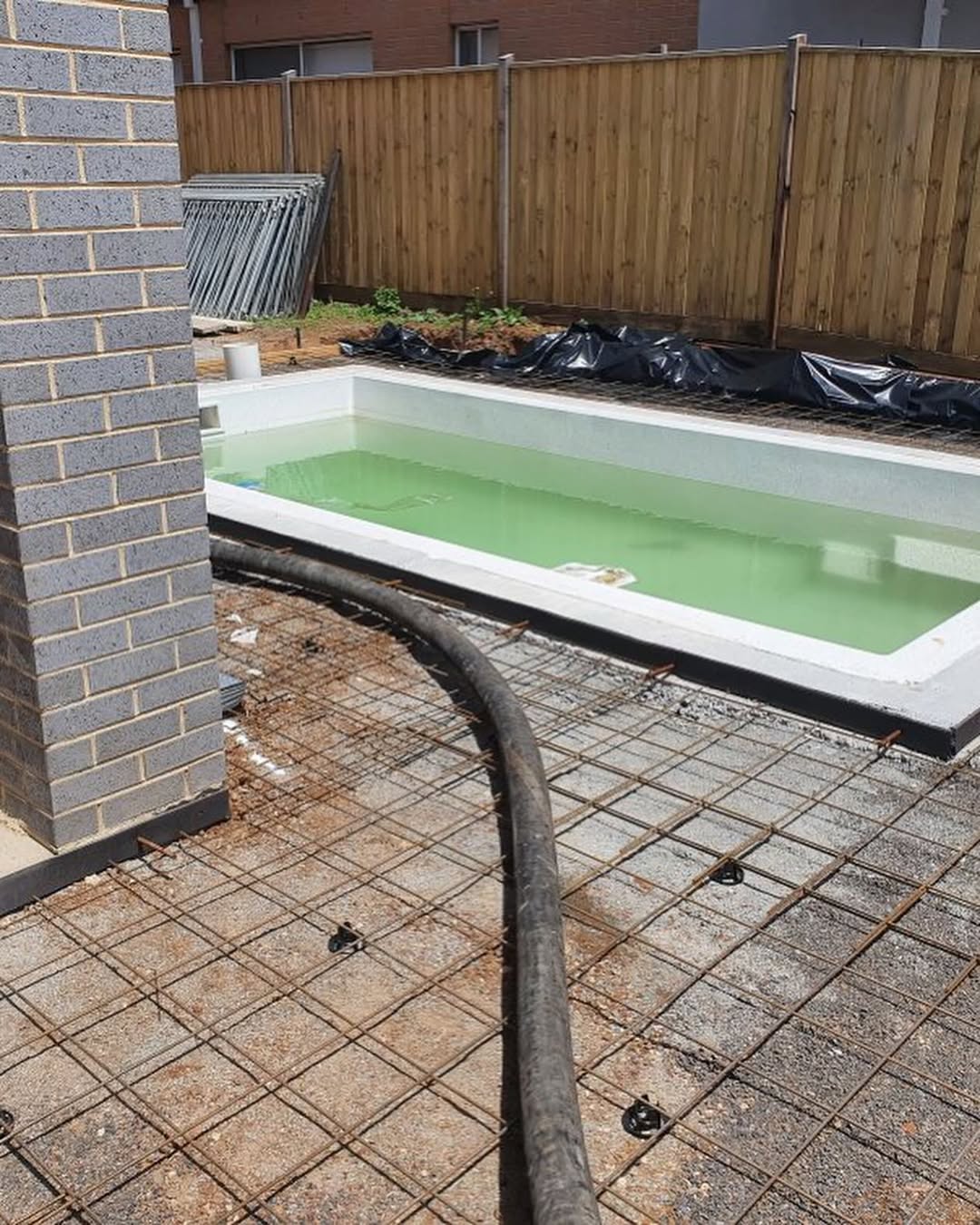
Pool shells and water features. Excavated backyard pools in established suburbs — line over fences, down steep access, sometimes after the shell for surrounds on a separate pour. Shell shotcrete is usually a dedicated crew; we still get called when structural benches or bulk fill adjacent to spray need pumping.
Retaining and slope stabilisation. Geelong's hills, Dandenong Ranges fringes, and cut-and-fill estate batters. Long lines, modest volumes, finish tied to geotech spec.
Tunnels and civil. Major infrastructure uses dedicated rigs; we're on the fringes — approach slabs, portal structures, and owner-builder scale works that still need professional pump capacity.
Failure modes we've seen (and how to avoid them)
- Line too long for the mix — pressure drop shows up as poor compaction at the nozzle.
- Trucks queued with nowhere to discharge — shotcrete doesn't wait; see site prep.
- Nozzle crew outrunning pump feed — causes surge-and-starve, bad layers, cold joints in the spray.
- Wash-out into drains — accelerators and cement fines are an environmental headache; we contain wash.
Planning a shotcrete job with a pump contractor
Send line length estimates, vertical rise, access photos, and the mix spec — not just MPa. Confirm who owns the line from pump to nozzle (often the spray contractor). If MetroFlow is placing adjacent structural concrete on the same visit, say so early so we sequence pumps and wash between mixes.
Shotcrete is unforgiving but absolutely manageable with the right pump stand, clean gear and a crew that communicates in metres per minute, not truckloads per hour.
Civil or pool structural work needing pumped wet-mix? Talk to us — we'll align with your spray contractor or recommend practical set-ups for your site.