
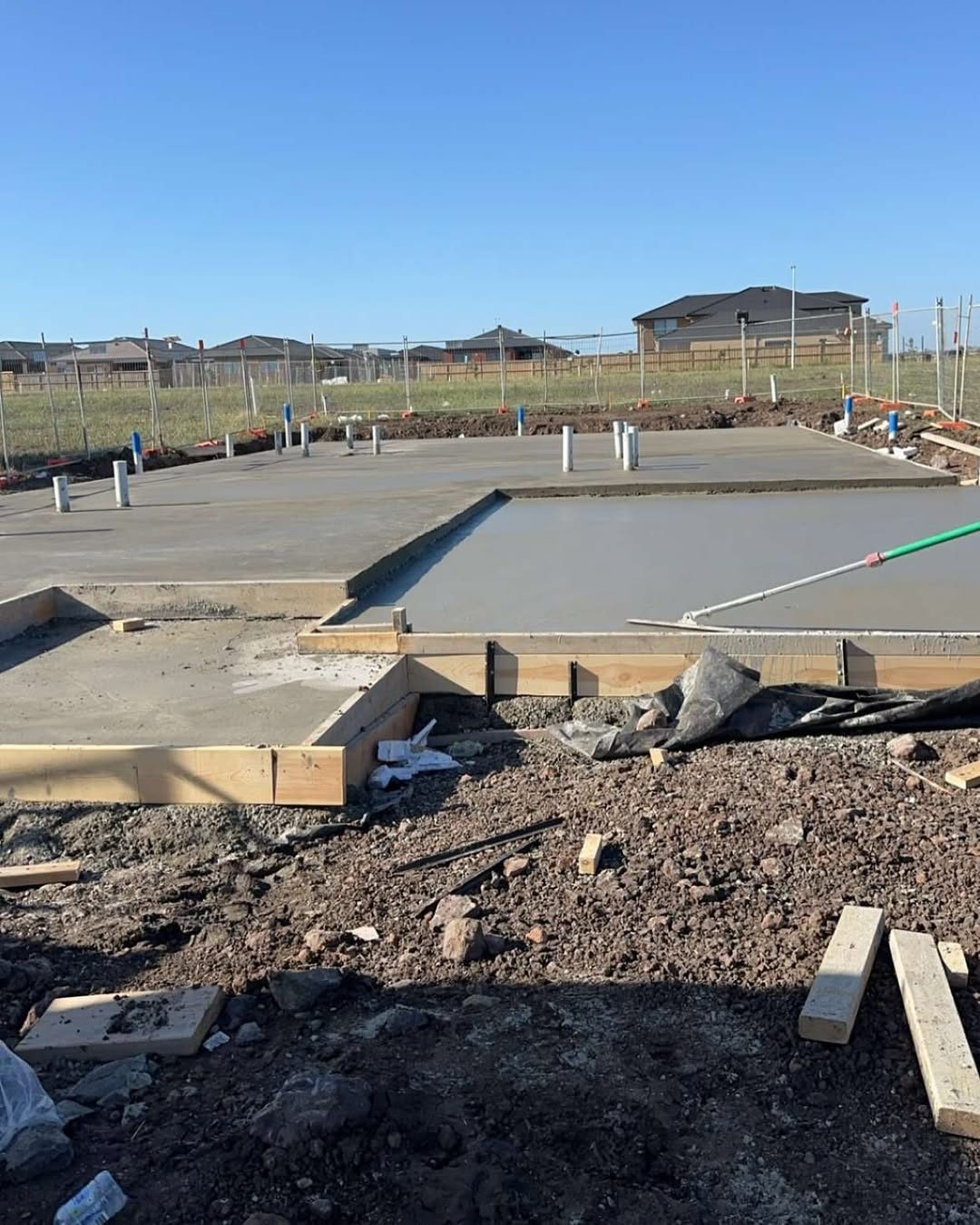
A suspended slab is any deck poured on formwork above ground — first-floor platforms, parking decks, balconies aggregated into structural bays. In Victoria they're everywhere: townhouse first floors over garages in Craigieburn, commercial mezzanines in Dandenong, apartment podium decks before the tower climbs. Pumping isn't optional at height; wheelbarrows don't exist at 4 metres and nobody wants crane skips for 120 cubic metres.
Boom reach and setup geometry
Suspended slabs are primarily boom pump work — hose at height needs controlled placement into formwork, often over scaffolding and edge form. Reach must cover the bay from achievable parking; see boom sizing and access requirements. Powerlines and overhead formwork bracing constrain boom path — walk the site before quote, not on pour morning.
Pour rate and formwork capacity
Formwork and props rate-limit pour speed as much as the pump. Operators match output to engineer's allowable pour rate — flooding formwork isn't a pump flex, it's a collapse risk. Communication with formwork contractor and structural engineer's instructions is mandatory on commercial decks.
Line alternative on low suspended slabs
First-floor slabs at 3–4 metres over sloping sites sometimes feed via line pump up scaffold ramps — specialist setup, higher friction, mix must cooperate. Honest assessment beats forcing line because boom hire sounds expensive.
Mix and structural spec
Suspended structural slabs spec MPa, shrinkage limits, sometimes fibre or self-compacting blends in congested zones. Pump operators need tickets and mix info — rich mixes at low slump fight the line on long vertical segments.
Truck scheduling
Elevated pours can't pause casually — cold joints are structural events. Truck cycling and hopper feed discipline from intake management apply even on residential first-floor slabs when volume exceeds one truck.
Multi-storey overlap
As buildings climb, suspended slabs become multi-storey program work — placing booms, risers, repeated cycles. Early pours set habits: operators who know the job beat rotating strangers.
Safety at height
Exclusion under deck, edge protection, hose handler positioning — integrated with site SWMS; see safety documentation. MetroFlow operators work elevated decks regularly across Melbourne.
Suspended slabs reward preparation — reach verified, rate agreed, trucks locked. Chaos at height is expensive in every sense.
Props and pour rate engineering
Formwork engineer specifies maximum pour rate per hour — often on drawings footnoted, sometimes missed in field briefings. Pump operator receives that number in writing on commercial work; residential suspended slabs over garages still have props rated for staged pour — respect the rate even when boom could go faster.
Balconies and setbacks
Small suspended balconies on apartment facades need precise hose placement — over-pour spills to level below, under-pour leaves rework. Mini line or boom tip placement with spotter standard; exclusion zone on level below maintained until strip.
Post-tension and pour sequencing
Post-tension slabs sometimes restrict pour direction and strip timing — pump placement sequence follows PT vendor direction to avoid unequal loading on stressing zones. Operator receives strip map or pour direction arrow sketch; deviating causes stressing delay or crack risk.
PT pockets and blockouts need hose awareness — striking blockout form with full hose end damages pocket precision.
Frequently asked questions
- Garage slab over room — boom enough? Often yes from street — measure reach to soffit.
- Pour rate limit? Formwork engineer may specify — provide to pump company in writing.
- Line up scaffold? Possible on low height — assessed case by case.
- Combine with ground slab? Sometimes two setups or sequence same day — plan access.
Townhouse developments pouring ten identical first-floor slabs over garages benefit from repeated boom parking plan — same class, same stand, operator notes refine truck staging week to week across the estate.
Engineer inspection of props and backpropping before suspended pour release is separate hold point — pump operator confirms pour rate compliance with formwork design assumptions documented on SWMS.
Acoustic mats and services hung below suspended slabs sometimes limit boom path — measure clear height including hung services before booking boom class.
Post-tension stressing schedule sometimes follows suspended pour within days — pump operator confirms pour records match PT vendor assumed strength at stressing time.
Booking with MetroFlow
Every pour starts with the same information: address or site, estimated volume, mix details if known, and photos of access from street to pour point. We respond with pump type recommendation, boom class if applicable, and all-in pricing without hidden wash or travel surprises on standard Metro jobs. On program work across Victoria, we hold rates and assign consistent operators where repeat quality matters. Whether your job is a Narre Warren house slab, a Geelong warehouse bay, or a Richmond basement wall, the physics of pumping don't change — only the geometry and mix do. Send the details through our quote form or call direct; we'd rather talk you out of the wrong pump than sell you the expensive one. Good pours are boring pours — preparation, honest communication, and operators who've seen your problem before make pour day forgettable in the best way.
Elevated deck on the program? Send formwork layout and volume — we'll size boom reach and output to your engineer's pour rate.